
Pain-free by design
No lancets and no blood, so checking is never something to put off.
Developed at the University of Glasgow
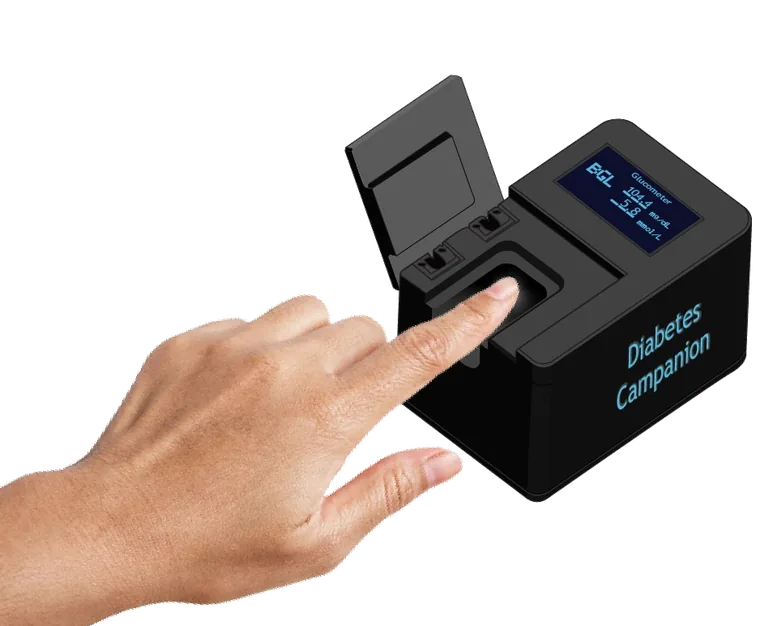
Diabetes Companion is a non-invasive glucose monitor. Testing is complete and regulatory applications have been filed in the UK, USA and Middle East. Rest your fingertip on the optical sensor, and your reading appears on the device and in the companion app. No needles, no test strips.
Source: IDF Diabetes Atlas, 11th edition (2025), adults aged 20–79.
Progress
From research prototype to regulatory review.
Working device and optical sensor developed at the University of Glasgow.
Device tested against laboratory reference measurements.
For fitness and medical-grade use in the UK, USA and Middle East.
The companion app is available on both platforms.
Applications are under review. Not yet approved.
For more information, contact Prof Qammer Abbasi
How it works
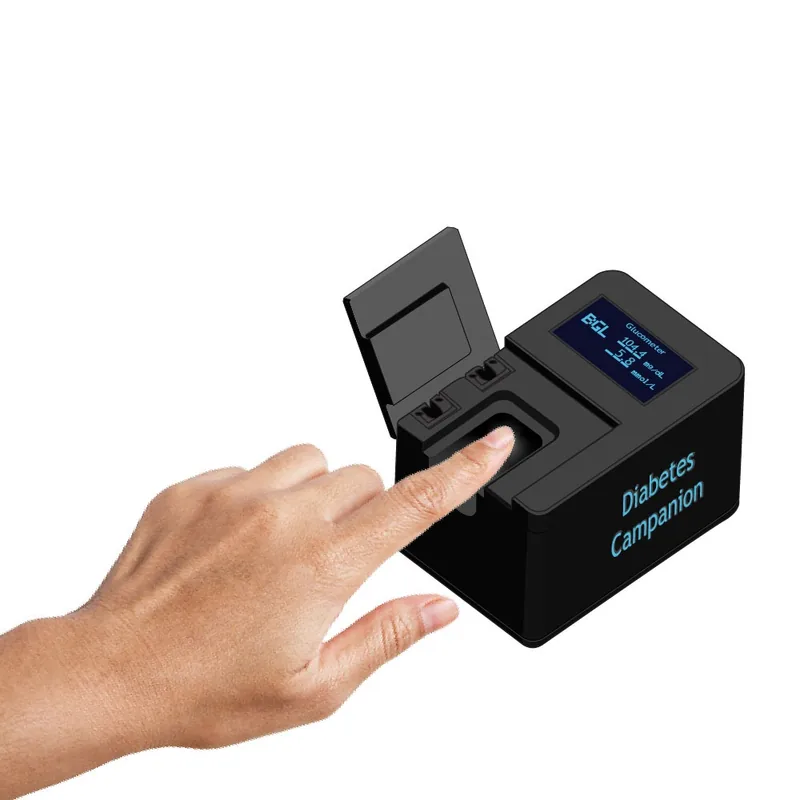
Designed to be as easy as using a pulse oximeter, with nothing to prick, insert or throw away.
Place a finger on the sensor and close the cover. No blood sample is needed.
Light passes through your fingertip, and the device measures how it changes.
The estimate appears on the display and syncs to the app, where you can follow trends over time.
See it in action
A short animated film about the problem with finger-prick testing and how Diabetes Companion is designed to help.

The companion app
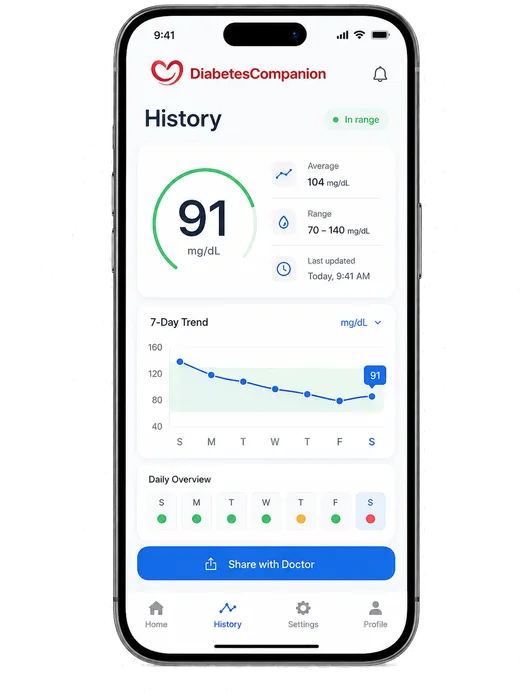
Available on iOS and Android, the app turns single readings into a picture you and your diabetes team can use.
Readings move from the device to your phone over Bluetooth.
See averages, ranges and patterns at a glance.
Prompts to check your glucose at the times that suit you.
Send a clear summary to your doctor or nurse.
For download details or more information, contact Prof Qammer Abbasi.
The technology
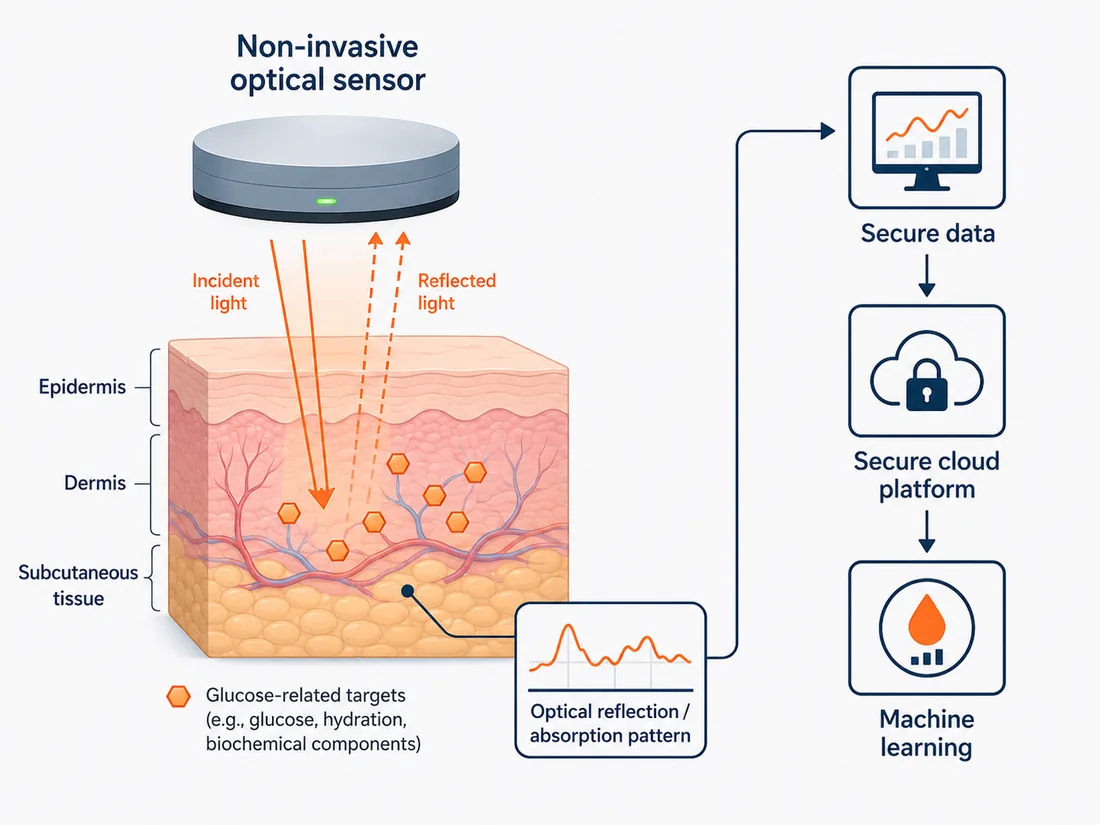
Glucose changes how light is absorbed and scattered in tissue. The challenge is separating that small signal from everything else in your finger.
Optical sensors measure how light changes as it passes through the fingertip.
A model trained against laboratory reference measurements turns the optical signal into a glucose estimate.
Readings are designed to be transferred securely and stored on a protected cloud platform.
Testing is complete and applications have been filed in the UK, USA and Middle East. Non-invasive glucose sensing is hard, so the evidence has to show reliable accuracy against laboratory reference values, including how the device copes with:
Why it matters
What we are aiming for, and why it could make regular checks easier.
No lancets and no blood, so checking is never something to put off.
The device is reusable, with no test strips or sensors to replace.
No used strips, lancets or sensor packs going into the bin.
Developed with partners in Pakistan, where affordable testing is a real need.
These are design goals. Final performance claims depend on regulatory approval.
Comparison
An honest side-by-side with the two main ways people check glucose today.
| Feature | Finger-prick meter | Continuous monitor (CGM) | Diabetes Companion |
|---|---|---|---|
| How it measures | A drop of blood on a test strip | A small filament under the skin | Light through the fingertip |
| Needles | Lancet every check | Sensor insertedReplaced every 1–2 weeks | None |
| Ongoing supplies | Strips and lancets | Replacement sensors | None expected |
| Readings | Single checks | Continuous, with alerts | Single checks |
| Status | Approved, widely available | Approved, widely available | Applications filedUK, USA, Middle East · awaiting approval |
Calculator
See how much finger-prick testing costs over time. In the UK, strips are often provided on NHS prescription, so this is the cost to whoever pays for them.
Change this to your own price. Strip prices vary widely by brand.
Estimate only, based on 30.4 days a month. Diabetes Companion pricing has not been set.
About the project
Diabetes Companion grew out of research at the University of Glasgow into affordable, needle-free glucose testing, especially for people in low- and middle-income countries.

Research team

Application developer

RF expert
FAQ
The device is not on sale yet. Testing is complete and regulatory applications have been filed in the UK, USA and Middle East for fitness and medical-grade use. Sales can begin only after approval. The companion app is already available on iOS and Android. For more information, contact Prof Qammer Abbasi.
We have completed testing and filed applications in the UK, USA and Middle East, covering both fitness (wellness) and medical-grade use. The applications are under review and the device is not yet approved. For details, contact Prof Qammer Abbasi.
Yes. The Diabetes Companion app is available on iOS and Android. For download details, contact Prof Qammer Abbasi.
The device has been tested against laboratory reference measurements, and the results form part of our regulatory applications. We will publish accuracy figures once they have been peer-reviewed or reviewed by regulators. Until approval, it must not be used to make treatment decisions.
No. Keep using the monitoring your diabetes team recommends. Diabetes Companion is not yet approved for medical use.
You rest a fingertip on the sensor. The device shines light through the finger and measures how it changes. A machine-learning model trained on reference measurements estimates glucose, and the reading is shown on the device and in the app.
Optical readings can be affected by skin tone, temperature, hydration, finger pressure and movement. Performance across a wide range of people and conditions is part of what regulators review.
Pricing and availability through the NHS or insurers have not been decided. Because the device works without test strips or sensors, the aim is to lower ongoing costs.
Researchers at the University of Glasgow, led by Prof Qammer Abbasi, working with academic and clinical partners in Pakistan. The work has been supported by the University's GCRF Small Grants Fund and an EPSRC partnership grant.
We only use it to send updates about Diabetes Companion. We never sell or share it, and you can ask us to remove it at any time by emailing Qammer.abbasi@glasgow.ac.uk.
Early updates
Be the first to hear about regulatory decisions, study results and availability. For anything else, contact Prof Qammer Abbasi.